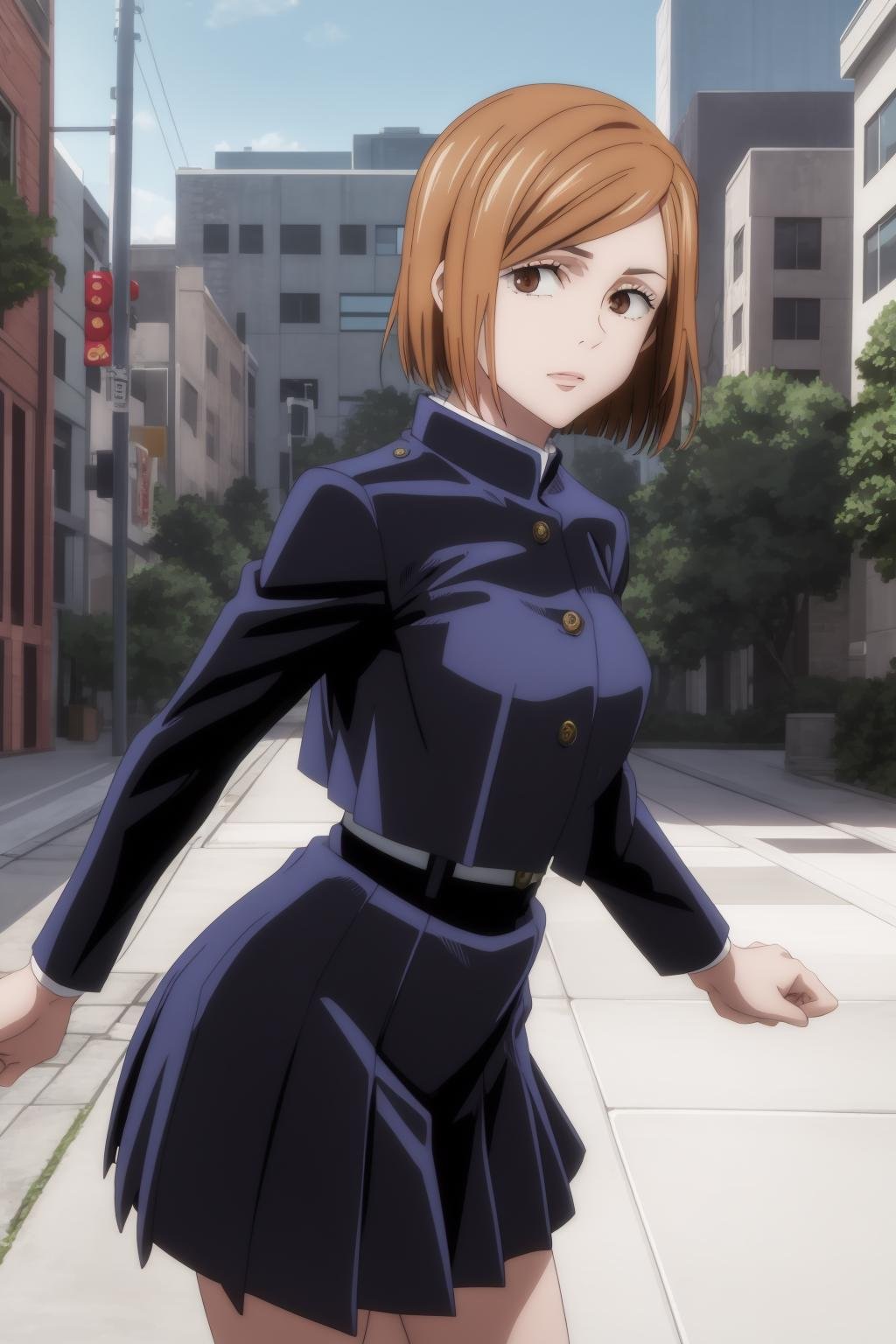
If you’ve heard the name Nobara Kugisaki mentioned alongside One Piece, you might be scratching your head. Nobara Kugisaki is unequivocally a core character from Gege Akutami's hit manga and anime Jujutsu Kaisen, not Eiichiro Oda's One Piece. Yet, a recent fan debate involving these two colossal franchises has thrust Nobara into an unexpected crossover spotlight, revolving around the contentious "fake death" trope in storytelling. This article unpacks that viral discussion, clarifying the misconception and diving deep into why Nobara became the unlikely focal point of a heated narrative argument.
We’re here to explain the big crossover misunderstanding around Nobara's presence in One Piece, revealing how a plot twist in Jujutsu Kaisen sparked a critical comparison with One Piece's long-standing narrative choices.
Unpacking the "Fake Death" Debate: Nobara Kugisaki's Role in a Crossover Controversy
The intense discussion ignited among fans of One Piece and Jujutsu Kaisen stems from a seemingly simple concept: characters appearing to die dramatically, only to miraculously return. This narrative device, often referred to as the "fake death" or "death trope," has been a recurring point of contention for many manga and anime enthusiasts. The recent catalyst for this particular cross-fandom debate was a leaked chapter of Jujutsu Kaisen that strongly hinted at the return of Nobara Kugisaki.
For many One Piece fans, this development felt eerily familiar. They quickly drew parallels to characters within their own series, such as Pell, Saul, Pound, and Kin'emon, who have all made dramatic comebacks after seemingly fatal encounters. These instances have often drawn criticism towards Eiichiro Oda's storytelling, leading some to accuse Jujutsu Kaisen's author, Gege Akutami, of employing a similar, much-criticized trope. Delve deeper into the 'fake death' trope controversy that ignited fanbases to understand the specific arguments from both sides.
However, Jujutsu Kaisen fans offered a robust counter-argument. They assert that Nobara’s situation is distinct. Her fate following a brutal encounter with the cursed spirit Mahito during the Shibuya Incident arc was intentionally left ambiguous, a deliberate narrative choice rather than a clear-cut "death" followed by a sudden revival. This ambiguity, they contend, suggests a carefully planned plot continuation, not a convenient undoing of an established death.
Who is Nobara Kugisaki? A Force in Jujutsu Kaisen
To truly understand the nuances of this debate, one must first grasp who Nobara Kugisaki actually is within her own universe. A creation of Gege Akutami, Nobara is a first-year student at Tokyo Jujutsu High, forming an iconic trio with Yuji Itadori and Megumi Fushiguro, all under the tutelage of the formidable Satoru Gojo. Her very name, Nobara Kugisaki, is designed to evoke her dual nature – "thorny" and "delicate" – a reflection of her complex personality.
Akutami designed Nobara to be remarkably true to herself, a character who steadfastly refuses to conform to external expectations. She’s depicted as logical, creative, and authentic, though she can also be quick to judge and easily angered. Beneath that fiery exterior, however, lies a deep care for her allies. To get the full picture of her background, motivations, and growth, consider diving deep into Nobara's character profile within the world of Jujutsu Kaisen.
The Power Behind the Persona: Nobara's Cursed Techniques
Nobara isn't just a compelling personality; she's a formidable Jujutsu Sorcerer with a unique and visually striking combat style. Her innate technique is the Straw Doll Technique, a powerful ability rooted in the traditional Japanese curse ritual known as ushi no toki mairi. This technique allows her to channel her cursed energy through a straw doll, creating devastating long-range attacks.
Her primary abilities include Resonance, which enables her to damage opponents from a distance by striking a nail into a straw doll connected to a part of their body, and Hairpin, which causes embedded nails in a target to explode. Beyond her innate technique, Nobara has also demonstrated the ability to use Black Flash, a rare spatial distortion that amplifies the power of a physical attack when cursed energy is applied within 0.000001 seconds. Explore all the intricacies of her formidable Straw Doll Technique and other abilities that make her such a vital combatant in Jujutsu Kaisen.
Shibuya's Aftermath: Nobara's Fate, Recovery, and Resurgence
Nobara's role in the "fake death" debate is intrinsically linked to the harrowing events of the Shibuya Incident arc. During a brutal confrontation with Mahito, she sustained grievous injuries when the cursed spirit touched her face, seemingly sealing her tragic demise. The scene left many fans heartbroken and convinced of her death. However, hope flickered when Arata Nitta intervened, managing to stabilize her condition, leaving her status pointedly ambiguous rather than definitively deceased.
This deliberate narrative choice by Akutami is central to the fan argument. Unlike characters whose deaths are explicit and then reversed, Nobara’s state was left in limbo for an extended period, allowing for a planned return. In recent developments, after being in a coma, Nobara has indeed reawakened, using her Resonance technique on Sukuna’s final finger, weakening him significantly and enabling Yuji to deliver a crucial blow. Following this pivotal moment, she reunites with Yuji and Megumi, dispelling the ambiguity surrounding her fate. For a detailed chronological breakdown of these critical moments, revisit the full account of her Shibuya Incident recovery and recent return.
Critical Reception: Praised Yet Criticized
Nobara Kugisaki has garnered significant praise from critics for being a refreshingly layered and strong female character in shōnen manga, often seen as a departure from common tropes. Her impactful presence and refusal to be sidelined earned her the "Best Girl" award at the 6th Crunchyroll Anime Awards, a testament to her popularity and critical acclaim.
However, the prolonged uncertainty surrounding her fate also drew criticism. Some critics lamented her ambiguous status as an example of the "women in refrigerators" trope, where a female character's suffering or uncertain destiny is used primarily to motivate male characters. Others felt her extended absence from the narrative was a missed opportunity, potentially wasting a character with immense depth and fan appeal. Despite these critiques, many fans and critics continue to argue why some argue Nobara transcends the 'woman in a refrigerator' trope, highlighting her agency and unique narrative journey even amidst her trials.
Oda vs. Akutami: Contrasting Narrative Philosophies
The "Nobara in One Piece" debate fundamentally underscores the differing narrative approaches of two legendary mangakas: Eiichiro Oda and Gege Akutami. Oda's One Piece is an epic adventure driven by themes of hope, dreams, and resilience, where characters frequently survive seemingly insurmountable odds. While significant deaths like Ace and Whitebeard profoundly impact the plot, many others navigate perilous situations with surprising longevity, leading to the perception of "fake deaths."
Conversely, Akutami's Jujutsu Kaisen portrays a grimmer, more unforgiving world where death is a frequent and often brutal reality, carrying immense emotional weight for the survivors. This difference in tone and narrative philosophy is crucial to understanding why the "fake death" trope feels distinct in each series. For a deeper analytical dive into how these two creative minds shape their respective worlds, explore a fascinating comparison of Eiichiro Oda's and Gege Akutami's narrative philosophies and how they influence character fates and fan expectations.
Beyond the Controversy
The "Nobara Kugisaki in One Piece explained" topic ultimately serves as a fascinating case study in how fan communities engage with narrative choices across different series. While Nobara is firmly a Jujutsu Kaisen character, her journey became a powerful lens through which to examine broader storytelling conventions, particularly the use and reception of the "fake death" trope. As both One Piece and Jujutsu Kaisen continue their epic runs, these conversations will undoubtedly evolve, offering new insights into the art of serialized storytelling and the passionate fandoms that drive them.